
Understanding the Keyword: What Does “Latest Baby Toys” Mean?
When parents search for the keyword “latest baby toys,” they are usually looking for newly released toys that are safe, educational, entertaining, and designed according to modern parenting trends. These toys are not just about keeping babies busy anymore. Today’s baby toys are carefully designed to support brain development, improve motor skills, encourage creativity, and even strengthen emotional bonding between parents and children.
The modern baby toy industry has changed dramatically over the last few years. Earlier, simple rattles and stuffed animals were enough for most babies. While classic toys are still loved, today’s parents are more interested in interactive toys, sensory-based products, Montessori-inspired learning kits, and eco-friendly materials. Brands now focus on creating toys that help babies learn naturally while they play.
Another important thing about the latest baby toys is safety and innovation. Parents are becoming more conscious about toxic materials, choking hazards, and screen addiction. Because of this, many toy companies now create BPA-free, non-toxic, soft-edged, and sustainable toys that are suitable for different age groups. The latest toys combine safety, education, and entertainment in one package.
Why Baby Toys Matter More Than Ever
Baby toys may look simple from the outside, but they play a very important role in early childhood development. During the first few years of life, a baby’s brain develops rapidly. Every sound, color, texture, and movement helps babies understand the world around them. The right toys can improve memory, hand-eye coordination, sensory development, and communication skills.
Modern child development experts believe that toys should not only entertain babies but also stimulate their curiosity. For example, sensory toys with different textures and sounds help babies improve their touch and listening abilities. Toys with bright colors improve visual development, while stacking toys help babies understand shapes, balance, and coordination.
Another reason why baby toys are important today is because they encourage independent learning. Instead of relying only on screens and digital entertainment, babies can interact physically with toys and learn through real experiences. This hands-on learning is extremely important for emotional and cognitive growth. That is why parents are now more selective about the toys they buy for their children.
Trending Types of Latest Baby Toys in 2026
1. Sensory Development Toys
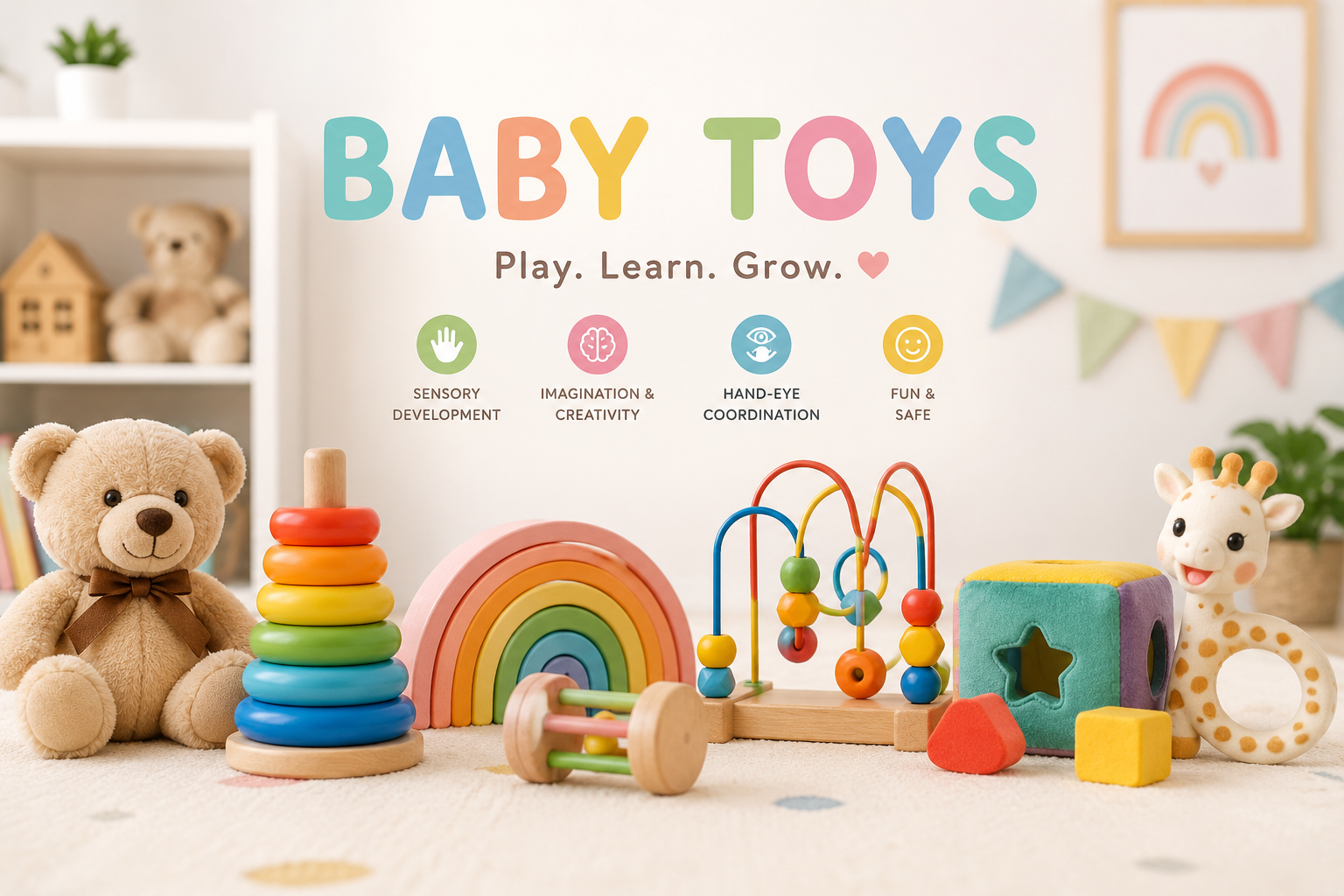
Sensory toys continue to dominate the baby toy market in 2026. These toys are specially designed to stimulate a baby’s senses including touch, sight, hearing, and movement. Popular examples include textured balls, soft sensory books, musical rattles, and light-up activity cubes.
One reason sensory toys are so popular is because they help babies stay engaged for longer periods. Babies naturally enjoy exploring different sounds and textures. A toy that crinkles, squeaks, or changes color can instantly grab a baby’s attention and encourage curiosity.
Experts also recommend sensory toys for babies who are learning to focus and react to their environment. These toys can improve concentration, support emotional regulation, and even help babies become more comfortable with new experiences.
2. Montessori Baby Toys
Montessori toys have become one of the biggest parenting trends in recent years. These toys focus on simplicity, independence, and practical learning instead of flashy lights or loud sounds. Wooden stacking toys, shape sorters, and object permanence boxes are among the most popular Montessori baby toys today.
Parents love Montessori toys because they encourage babies to think and explore independently. Instead of overstimulating the child, these toys allow babies to use their own creativity and problem-solving abilities. This creates a calmer and more meaningful play experience.
Another reason Montessori toys are trending is their natural and eco-friendly design. Many parents now prefer wooden toys over plastic ones because they are durable, safe, and environmentally friendly.
3. Interactive Learning Toys
Interactive toys are also among the latest favorites for babies. These toys respond to touch, movement, or sound and often include music, lights, or voice interaction. Smart activity mats, talking plush toys, and musical learning tables are some common examples.
Interactive toys can make learning more exciting for babies. They help babies understand cause and effect relationships. For example, when a baby presses a button and hears music, they learn that actions can create responses.
Parents should still use interactive toys in moderation. While these toys are fun and educational, experts recommend balancing them with traditional hands-on play to avoid overstimulation.
Safety Features Parents Should Look for in Baby Toys
Safety should always be the top priority when buying baby toys. No matter how attractive or educational a toy looks, it must be safe for the baby’s age and development stage. Parents should always check age recommendations before purchasing any toy.
One of the most important things to avoid is small detachable parts that could become choking hazards. Babies naturally put objects in their mouths, so toys should be large enough to prevent accidental swallowing. Soft edges and durable materials are also essential.
Parents should also choose toys made from non-toxic and BPA-free materials. Many trusted brands now focus on eco-friendly production and safe paints. Washing and cleaning toys regularly is another important step to protect babies from germs and bacteria.
The Rise of Eco-Friendly Baby Toys
Eco-friendly baby toys are becoming more popular as parents become more environmentally conscious. These toys are usually made from natural wood, organic cotton, recycled plastic, or biodegradable materials.
Many modern parents prefer eco-friendly toys because they are safer for babies and better for the environment. Unlike low-quality plastic toys, sustainable toys often last longer and contain fewer harmful chemicals.
Another advantage of eco-friendly toys is their timeless design. Many wooden toys have a classic and minimal appearance that encourages creative play instead of overstimulation. They are simple, beautiful, and educational at the same time.
Best Latest Baby Toys for Different Age Groups
Newborns (0–6 Months)
Newborn babies benefit most from soft and sensory-based toys. During this stage, babies are learning to recognize sounds, faces, and colors. Soft rattles, black-and-white visual cards, hanging crib toys, and plush comfort toys are excellent choices.
At this age, babies do not need complicated toys. Simple movement and soothing sounds are enough to stimulate their developing senses. Toys that encourage tummy time are also highly recommended.
Parents should focus on comfort and safety for newborn toys. Soft materials and lightweight designs are ideal because newborns have delicate skin and limited motor control.
Infants (6–12 Months)
As babies grow older, they become more active and curious. They start grabbing, crawling, and exploring objects more independently. Toys like stacking rings, musical cubes, crawling companions, and activity centers become extremely useful.
Interactive toys are especially helpful during this stage because babies begin understanding cause and effect. Pressing buttons, pulling strings, and moving objects can improve coordination and confidence.
This is also a great time to introduce problem-solving toys such as shape sorters and simple puzzles. These toys encourage babies to think and experiment while playing.
Toddlers (1–3 Years)
Toddlers require toys that support movement, creativity, and communication. Push-and-pull toys, ride-on toys, pretend play sets, and building blocks are among the best options for this age group.
Language development also becomes important during toddlerhood. Talking toys, picture books, and interactive storytelling products can help toddlers improve vocabulary and communication skills.
Parents should encourage open-ended play during this stage. Toys that allow toddlers to build, create, and imagine are far more beneficial than toys with limited interaction.
Technology and Smart Baby Toys
Technology has entered the baby toy industry in a major way. Smart baby toys now include features like motion sensors, AI-based learning systems, voice recognition, and mobile app connectivity.
Some modern toys can even adapt to a baby’s developmental stage by changing sounds, activities, and difficulty levels. These smart toys aim to create personalized learning experiences for babies.
While smart toys can be helpful, experts still recommend moderation. Too much screen-based interaction can reduce physical activity and parent-child communication. The best approach is to combine technology with traditional hands-on play.
How to Choose the Right Baby Toys
Choosing the right baby toy can feel overwhelming because there are so many options available today. Parents should first consider the baby’s age, interests, and developmental needs. A toy that is perfect for one stage may not be suitable for another.
Quality is more important than quantity. Instead of buying many cheap toys, parents should focus on a few high-quality products that encourage learning and creativity. Durable toys are safer and provide longer value.
Parents should also observe how babies interact with different toys. Some babies enjoy music and movement, while others prefer sensory exploration or problem-solving activities. Understanding the child’s personality can help parents choose toys more effectively.
Final Thoughts
The world of baby toys has evolved tremendously in recent years. The latest baby toys are no longer just colorful objects for entertainment. They are carefully designed tools that support learning, creativity, emotional growth, and sensory development.
From Montessori-inspired wooden toys to smart interactive learning systems, parents now have access to a wide variety of safe and educational options. However, the best toy is not always the most expensive or technologically advanced one. The most valuable toys are those that encourage babies to explore, learn, and connect with the world around them.
As parenting trends continue to evolve in 2026, one thing remains constant: babies learn best through play. By choosing safe, engaging, and development-focused toys, parents can help create meaningful learning experiences that support healthy growth during the early years of childhood.