
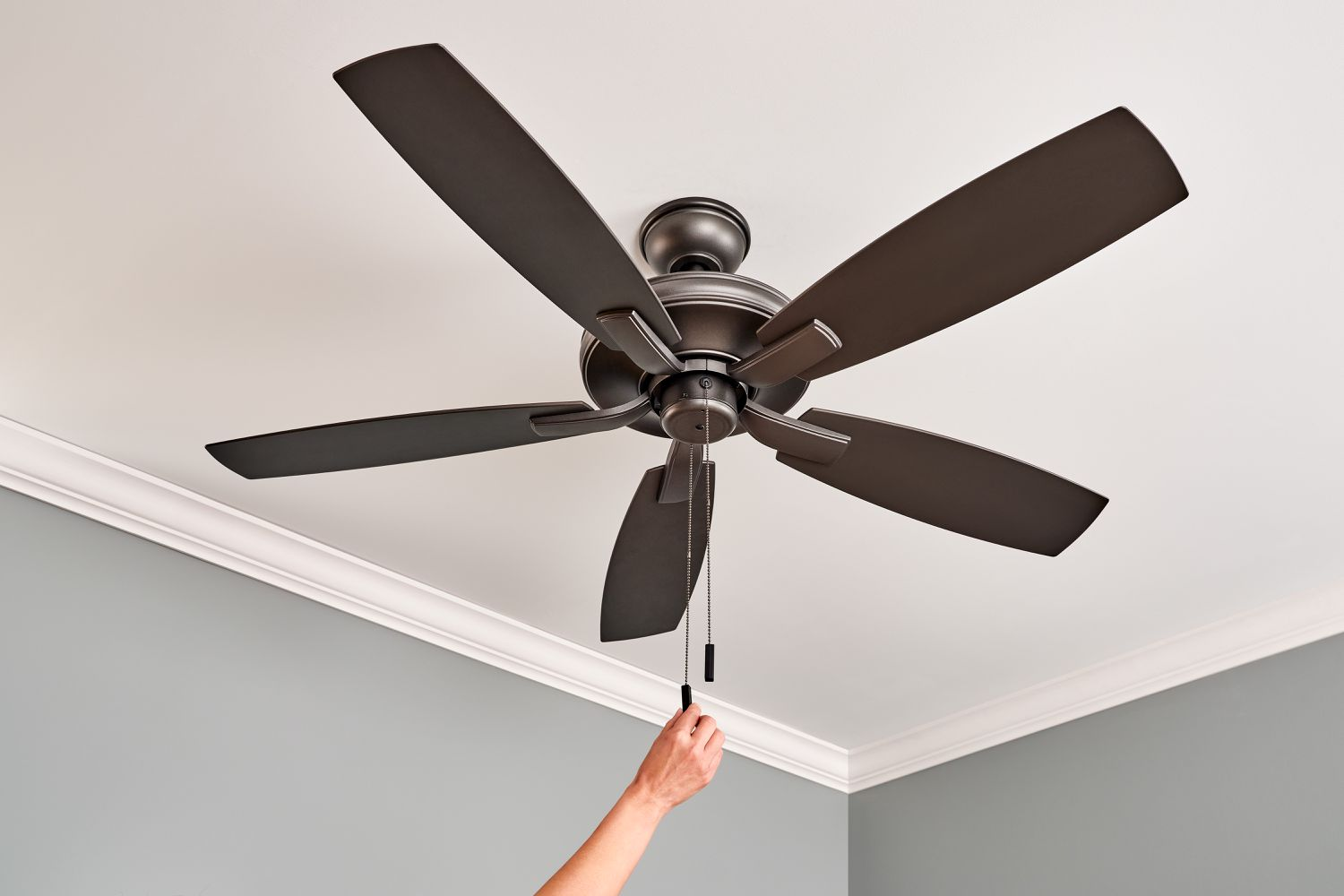
Ceiling fans are one of the simplest yet most effective ways to improve comfort inside a home. However, many people overlook one important detail that can make a huge difference in both comfort and energy efficiency: ceiling fan direction. The direction your ceiling fan spins can affect room temperature, airflow, and even your electricity bill.
A lot of homeowners keep their ceiling fans running year-round without realizing that the fan direction should actually change depending on the season. During summer, the fan should rotate differently than it does in winter. Using the wrong setting can reduce comfort and make your HVAC system work harder than necessary.
In this guide, we’ll break down everything you need to know about ceiling fan direction, including which way your fan should spin in summer and winter, how to change the direction, and why it matters more than most people think.
Why Ceiling Fan Direction Matters
The direction of a ceiling fan determines how air circulates throughout a room. While a fan does not technically cool or heat the air, it changes how the air feels on your skin. This is why choosing the correct fan direction can significantly improve indoor comfort.
When the fan rotates counterclockwise, it pushes air downward and creates a wind-chill effect. This makes the room feel cooler, even if the actual temperature remains the same. As a result, homeowners can raise the thermostat slightly and still stay comfortable, which helps reduce energy costs during warmer months.
On the other hand, a clockwise rotation gently pulls cool air upward and redistributes warm air trapped near the ceiling. This is especially useful during winter because warm air naturally rises. By pushing that warm air back down into the living space, the fan helps maintain a more even temperature throughout the room.
Another important reason ceiling fan direction matters is energy efficiency. Heating and cooling systems consume a large portion of household electricity. A properly adjusted ceiling fan can reduce strain on your HVAC system and help lower monthly utility bills without sacrificing comfort.
Which Direction Should a Ceiling Fan Spin in Summer?
During summer, your ceiling fan should spin counterclockwise. This direction creates a direct downward airflow that produces a cooling breeze. Most people can instantly feel the difference when standing beneath the fan.
The counterclockwise rotation enhances evaporation on the skin, which helps your body feel cooler naturally. Because of this cooling effect, many homeowners can increase their thermostat setting by a few degrees without noticing discomfort. Over time, this small adjustment can lead to noticeable savings on electricity bills.
You can easily test whether your fan is spinning the correct way. Stand directly beneath the fan while it is running at medium or high speed. If you feel a strong, cool breeze blowing downward, the fan is rotating properly for summer use.
In addition to improving comfort, the correct summer fan direction can make larger rooms feel more comfortable. Open living spaces often struggle with uneven cooling, especially during hot weather. A properly spinning ceiling fan helps circulate air more effectively throughout the entire room.
Another advantage is that ceiling fans consume far less electricity than air conditioning systems. While a fan cannot replace an AC unit entirely, it can reduce the need for constant air conditioning use, especially during mild summer days.
Which Direction Should a Ceiling Fan Spin in Winter?
In winter, your ceiling fan should rotate clockwise at a low speed. This setting may seem unusual at first because it does not create a strong breeze like the summer setting. However, it serves a very different purpose.
Warm air naturally rises and collects near the ceiling. In many homes, especially those with high ceilings, a large amount of heated air becomes trapped overhead while cooler air stays near the floor. A clockwise-spinning fan gently pulls cooler air upward and pushes warm air down along the walls of the room.
This circulation helps create a more balanced indoor temperature. Rooms feel warmer and more comfortable without requiring the heating system to work as hard. As a result, homeowners may be able to lower thermostat settings slightly and still maintain comfort.
The key during winter is to keep the fan on a low speed. A high-speed clockwise rotation could create an uncomfortable draft. The goal is gentle air circulation, not a noticeable breeze.
Many people ignore ceiling fans during winter because they assume fans are only useful in hot weather. In reality, using the correct fan direction during colder months can improve heating efficiency and reduce energy waste significantly.
How to Change Ceiling Fan Direction
Changing the direction of a ceiling fan is usually a simple process, although it may vary slightly depending on the model. Most modern ceiling fans include a small switch located on the motor housing.
Before changing the direction, always turn the fan off completely. Wait for the blades to stop moving to avoid any safety risks. Once the fan has stopped, locate the direction switch. Typically, sliding the switch one way sets the fan to clockwise rotation, while sliding it the opposite way changes it to counterclockwise.
Some newer ceiling fans come with remote controls or smart home integration. In these models, you can often change the direction through a remote button or a mobile app. Smart ceiling fans make seasonal adjustments much more convenient because you do not need to reach the fan manually.
After changing the setting, turn the fan back on and observe the blade rotation. You can confirm the direction by standing underneath the fan and checking the airflow. Strong downward airflow indicates the summer setting, while gentle upward circulation usually indicates the winter setting.
If you are unsure about the correct direction, consult the fan’s instruction manual. Different manufacturers may use slightly different controls, but the general principle remains the same across most ceiling fan models.
Common Mistakes People Make With Ceiling Fan Direction
One common mistake is leaving the fan on the same setting all year. Many homeowners never switch the fan direction after installation, which means they miss out on important energy-saving benefits during different seasons.
Another mistake is running the fan at high speed during winter. While the clockwise direction is correct for colder months, high speeds can create uncomfortable airflow and reduce the intended warming effect. Winter operation should always use low speed for gentle circulation.
Some people also believe ceiling fans lower room temperature. In reality, fans cool people, not rooms. This means leaving a fan running in an empty room wastes electricity because the cooling effect only works when someone is present to feel the airflow.
Incorrect blade angle or dirty fan blades can also affect performance. Dust buildup reduces airflow efficiency and can spread allergens throughout the room. Cleaning the blades regularly helps maintain optimal airflow and keeps the fan operating smoothly.
Finally, many homeowners overlook room size when choosing fan speed. Larger rooms may require higher speeds in summer to distribute airflow effectively, while smaller rooms may feel too drafty if the fan runs too fast.
Benefits of Using the Correct Ceiling Fan Direction
Using the proper ceiling fan direction offers several practical benefits beyond basic comfort. One of the biggest advantages is lower energy consumption. Because fans help rooms feel cooler or warmer naturally, homeowners rely less on heating and cooling systems.
Another benefit is improved indoor air circulation. Stagnant air can make rooms feel stuffy and uncomfortable. Proper fan operation keeps air moving consistently, which creates a fresher indoor environment.
Correct ceiling fan direction can also extend the lifespan of HVAC systems. When heating and cooling equipment does not need to work as hard, it experiences less wear and tear over time. This may reduce maintenance costs and increase system longevity.
Comfort is another major advantage. Proper airflow helps eliminate hot and cold spots within a room, making indoor spaces feel more balanced year-round. This is particularly helpful in homes with vaulted ceilings or large open floor plans.
Additionally, ceiling fans are cost-effective. Compared to air conditioning systems, fans use very little electricity. Even running a fan for several hours daily usually costs only a small fraction of what an AC unit would consume.
Final Thoughts on Ceiling Fan Direction
Understanding ceiling fan direction is a small detail that can make a surprisingly big impact on home comfort and energy efficiency. During summer, a counterclockwise rotation creates a cooling breeze that helps reduce reliance on air conditioning. In winter, a clockwise rotation redistributes warm air and supports more efficient heating.
Many homeowners underestimate how much proper fan usage can improve indoor comfort. Simply changing the direction twice a year can help maintain better airflow, lower energy bills, and reduce strain on HVAC systems.
Whether you use a traditional ceiling fan or a modern smart model, taking a few moments to adjust the fan direction seasonally is well worth the effort. It is one of the easiest and most affordable ways to improve comfort in any home throughout the year.