
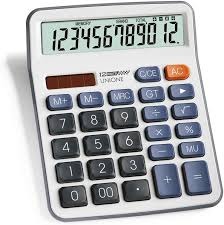
In today’s digital world, calculators are still one of the most useful tools for students, business owners, accountants, engineers, and even everyday users. Among the different types available, the LCD calculator remains one of the most popular choices because of its convenience, accuracy, and easy-to-read display. Whether you are solving basic math problems or handling complex financial calculations, an LCD calculator can make your work faster and more efficient.
Many people use calculators daily without paying attention to the technology behind them. However, the LCD display is one of the main reasons modern calculators are so practical and user-friendly. These calculators are lightweight, affordable, and designed for long-term usage. From schools and offices to homes and retail shops, LCD calculators are used almost everywhere.
In this article, we will explore everything about LCD calculators, including their features, advantages, uses, and why they are still important in the modern era. If you are looking for detailed information about LCD calculators, this guide will help you understand them completely.
What Is an LCD Calculator?
An LCD calculator is a calculator that uses a Liquid Crystal Display (LCD) screen to show numbers and mathematical operations. Unlike older calculators that used LED displays and consumed more power, LCD calculators are energy-efficient and easier on the eyes. The LCD screen displays clear digits, making calculations simple and accurate.
The technology behind LCD screens allows calculators to use very little electricity. This is why many LCD calculators can run for years on a small battery or even solar power. The low power consumption makes them reliable for everyday use. Most modern calculators available in the market today use LCD screens because they provide better visibility and longer battery life.
Another reason LCD calculators became popular is their portability. These calculators are usually compact and lightweight, allowing users to carry them easily in bags, pockets, or office drawers. Whether someone is a student solving equations or a shopkeeper managing accounts, an LCD calculator provides quick and dependable performance.
Key Features of an LCD Calculator
One of the biggest reasons people prefer LCD calculators is the wide range of features they offer. Modern LCD calculators are designed to handle both simple and advanced calculations efficiently. Even basic models come with useful functions that make daily tasks easier.
The first noticeable feature is the clear display. LCD screens show numbers in a sharp and readable format, reducing the chances of mistakes. Many calculators also have large displays that can show multiple digits at once. This is especially useful for accountants and professionals who work with large numbers regularly.
Another important feature is energy efficiency. Most LCD calculators use minimal battery power, and many models include solar panels for extra convenience. This combination helps users avoid frequent battery replacements. In addition, some advanced LCD calculators include memory storage, percentage functions, tax calculations, and scientific operations, making them suitable for different industries and educational purposes.
Advantages of Using an LCD Calculator
LCD calculators provide several advantages that make them a preferred choice worldwide. One major benefit is accuracy. Manual calculations can sometimes lead to errors, especially when dealing with large numbers or repeated calculations. An LCD calculator reduces this risk by providing instant and precise answers.
Another advantage is speed. In offices, schools, and businesses, time is extremely valuable. LCD calculators help users complete calculations quickly, improving productivity. For example, cashiers can process transactions faster, while students can solve math problems more efficiently during exams or homework sessions.
Durability is also an important benefit. Most LCD calculators are built to last for years with proper care. Since LCD screens consume less power and generate less heat, the devices experience less wear and tear over time. Many calculators are designed with strong buttons and durable materials, making them suitable for long-term daily use.
Common Uses of LCD Calculators
LCD calculators are used in many areas of life because they are practical and easy to operate. In schools and colleges, students use them to solve arithmetic problems, algebra equations, and scientific calculations. Teachers also rely on calculators for quick demonstrations during lessons.
In businesses and offices, LCD calculators are essential for accounting, billing, budgeting, and financial management. Shopkeepers use them for calculating prices, discounts, and taxes, while accountants depend on advanced models for handling large financial data. Their reliability makes them an important part of office equipment.
At home, LCD calculators are often used for personal budgeting, grocery calculations, utility bill management, and other daily tasks. Even with smartphones available today, many people still prefer dedicated calculators because they are faster to access and easier to use for mathematical operations.
Types of LCD Calculators
There are several types of LCD calculators available, each designed for specific purposes. Basic calculators are the simplest models and are ideal for everyday arithmetic operations such as addition, subtraction, multiplication, and division. These calculators are commonly used by students and general users.
Scientific LCD calculators are more advanced and support functions like trigonometry, logarithms, fractions, and algebraic equations. These calculators are popular among engineering and science students because they can handle complex mathematical operations efficiently.
Financial and business calculators are specially designed for accounting and financial tasks. They often include functions for tax calculations, profit margins, interest rates, and currency conversion. Some advanced models even come with printing capabilities for professional use in offices and retail businesses.
How LCD Technology Improves Calculator Performance
LCD technology plays a major role in improving the overall performance of calculators. The biggest improvement comes from reduced energy consumption. Since LCD screens require very little electricity, calculators can operate for years without significant battery issues. This makes them both cost-effective and environmentally friendly.
The display quality is another major advantage. LCD screens provide clear visibility under normal lighting conditions, making calculations easier to read. Many modern calculators also include tilted screens, which improve viewing angles and reduce eye strain during long working hours.
In addition, LCD technology allows manufacturers to create slim and lightweight calculator designs. Older display technologies required more power and space, but LCD screens enabled compact designs that are easier to carry and store. This portability is one reason why LCD calculators became so widely accepted around the world.
Tips for Choosing the Best LCD Calculator
Choosing the right LCD calculator depends on your specific needs. If you only need basic calculations for daily use, a simple calculator with standard functions will be enough. These models are affordable, easy to use, and suitable for students and home users.
For educational or professional purposes, a scientific or financial calculator may be a better option. Before buying, users should check the number of functions available, display size, battery life, and button quality. A calculator with larger keys and a clear screen usually offers a more comfortable experience.
Brand reputation also matters when selecting an LCD calculator. Reliable brands often provide better durability, accurate calculations, and longer-lasting performance. Investing in a high-quality calculator can save money in the long run because it reduces the chances of malfunction or replacement.
The Future of LCD Calculators
Even though smartphones and computers can perform calculations, LCD calculators continue to remain relevant. Many schools and examination centers still allow dedicated calculators because they are distraction-free and specifically designed for mathematical tasks. Their simplicity and reliability make them more practical in many situations.
Manufacturers are also improving calculator technology by adding better displays, advanced functions, and eco-friendly features. Solar-powered calculators, for example, reduce battery usage and support sustainable energy practices. Some modern calculators even include dual power systems for extra reliability.
As technology evolves, LCD calculators are expected to become more efficient and user-friendly. Their combination of simplicity, affordability, and performance ensures that they will continue to play an important role in education, business, and everyday life for many years to come.
Conclusion
The LCD calculator is one of the most practical and widely used electronic devices in the world. Its clear display, low power consumption, accuracy, and ease of use make it suitable for students, professionals, businesses, and households alike. Whether you need a simple calculator for daily math or an advanced scientific model for professional work, LCD calculators provide reliable performance at an affordable cost.
Over the years, LCD technology has transformed calculators into compact, efficient, and long-lasting tools. Despite the rise of smartphones and digital apps, LCD calculators still offer unmatched convenience for quick and focused calculations. Their durability and versatility continue to make them an essential device in modern life.
If you are planning to buy a calculator, choosing an LCD calculator is a smart decision because it combines functionality, efficiency, and long-term reliability in one compact device.