
Introduction
Fruit bats are among the most fascinating creatures in the animal kingdom. Often misunderstood because of their appearance and association with darkness, these flying mammals actually play an important role in maintaining healthy ecosystems. Unlike the smaller insect-eating bats that many people are familiar with, fruit bats mainly survive on fruits, nectar, and flowers. Their peaceful nature and ecological importance make them incredibly valuable to forests and agriculture around the world.
These bats are commonly found in tropical and subtropical regions, especially in Asia, Africa, Australia, and some Pacific islands. They are also known as “flying foxes” because many species have fox-like faces with large eyes and pointed ears. Their impressive wingspan and ability to travel long distances make them one of the most unique mammals on Earth. Some larger species can even have wingspans reaching over five feet, which is remarkable for a flying mammal.
Over the years, fruit bats have gained both admiration and fear. While some people appreciate their contribution to pollination and seed dispersal, others wrongly consider them dangerous pests. The truth is that fruit bats are far more beneficial than harmful. Understanding their behavior, habitat, and ecological role helps people appreciate how important they are for biodiversity and environmental balance.
What Is a Fruit Bat?
Fruit bats belong to the family Pteropodidae, which includes more than 190 species. Unlike microbats that use echolocation to hunt insects, most fruit bats rely on their excellent eyesight and strong sense of smell to locate food. Their large eyes allow them to navigate during the night while searching for ripe fruits and flowering plants.
One of the most interesting things about fruit bats is their diet. They mainly consume fruits such as mangoes, bananas, figs, guavas, and dates. Some species also feed on nectar and pollen. While eating, they accidentally spread seeds across wide areas, helping forests regenerate naturally. This makes them essential for the growth of many tropical plants and trees.
Fruit bats are generally social animals that live in large colonies. Some colonies may contain hundreds or even thousands of bats hanging together on trees during the daytime. At night, they leave their roosts to search for food. Despite their large numbers, they are usually quiet and non-aggressive creatures that avoid human interaction whenever possible.
Physical Characteristics of Fruit Bats
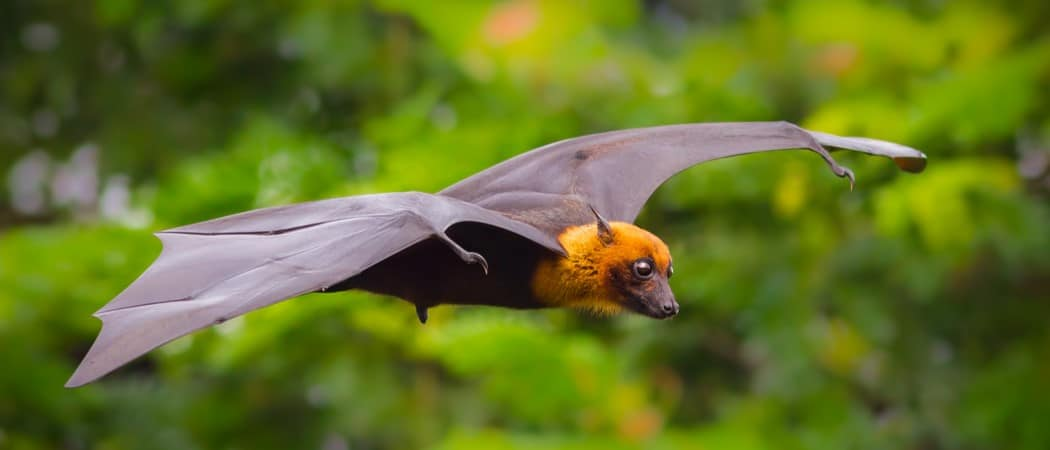
Fruit bats have several unique physical features that distinguish them from other bat species. One of their most noticeable traits is their large wings. Their wings are made of thin skin stretched across elongated fingers, allowing them to glide smoothly through the air. These wings are highly flexible and help them travel long distances while conserving energy.
Another remarkable feature is their fox-like face. Unlike insect-eating bats with small eyes and sharp noses, fruit bats often have larger eyes and longer snouts. Their appearance is actually quite gentle compared to the scary image people often associate with bats. Their fur color can vary depending on the species, ranging from golden brown to black or reddish tones.
Fruit bats also possess strong claws that help them hang upside down from branches. Hanging upside down is their natural resting position because it allows them to take off quickly when threatened. Their lightweight body structure and specialized muscles make this unusual posture comfortable and efficient for survival.
Habitat and Distribution
Fruit bats are widely distributed across tropical and subtropical regions. They prefer warm climates with abundant fruit-bearing trees and flowering plants. Countries in Southeast Asia, Africa, Australia, and the Pacific islands are home to many fruit bat species. Dense forests, mangroves, orchards, and even urban gardens can serve as suitable habitats for them.
These bats usually roost in tall trees during the day. They select locations that provide protection from predators and harsh weather conditions. Some species also live in caves or forest canopies. Since they depend heavily on fruit availability, their movement often changes according to seasonal food supplies.
Deforestation and habitat destruction have become major threats to fruit bats in recent decades. As forests disappear, these animals lose both shelter and food sources. Urban expansion, agricultural development, and hunting have significantly reduced populations in some regions. Conservation efforts are now becoming increasingly important to protect these beneficial creatures and their natural habitats.
Importance of Fruit Bats in the Ecosystem
Fruit bats are often called “forest gardeners” because they play a critical role in seed dispersal. After consuming fruits, they carry seeds over long distances before dropping them through waste or leftovers. This process helps regenerate forests and supports plant diversity in tropical ecosystems.
In addition to spreading seeds, fruit bats are also important pollinators. Many flowering plants depend on them for pollination, especially plants that bloom at night. As bats feed on nectar, pollen sticks to their bodies and gets transferred from one flower to another. This process is essential for the reproduction of various trees and plants.
Without fruit bats, many forests would struggle to recover from environmental damage. Their contribution supports wildlife habitats, improves biodiversity, and helps maintain ecological balance. Farmers also indirectly benefit from fruit bats because healthy forests contribute to better soil quality, cleaner air, and stable climates.
Behavior and Lifestyle
Fruit bats are nocturnal animals, meaning they are most active during the night. They spend their daytime hours resting and grooming while hanging upside down in groups. Once the sun sets, they begin searching for food using their strong vision and sense of smell.
These bats are highly intelligent and social creatures. Within colonies, they communicate using vocal sounds, body language, and scent signals. Mothers are known to care deeply for their young, carrying babies with them during the early stages of life. Baby bats usually cling tightly to their mothers until they become capable of flying independently.
Fruit bats also have impressive navigation skills. Some species travel dozens of miles in a single night while searching for fruit trees. Their memory allows them to remember feeding locations and migration routes over long periods. This adaptability helps them survive in changing environments.
Common Myths About Fruit Bats
Many myths surrounding fruit bats are based on fear and misunderstanding. One common misconception is that all bats are aggressive or dangerous. In reality, fruit bats are generally harmless and prefer avoiding humans whenever possible. They are not naturally violent creatures and rarely attack people.
Another myth is that fruit bats are blind. This is completely false. Most fruit bats actually have excellent eyesight, especially in low-light conditions. Their ability to see clearly at night helps them locate fruits and navigate safely through forests.
People also wrongly assume that fruit bats only destroy crops. While they may occasionally feed on cultivated fruits, their ecological benefits far outweigh the minor agricultural damage they cause. In many cases, fruit bats actually support agriculture by pollinating plants and maintaining healthy ecosystems.
Threats and Conservation
Fruit bats face several threats in the modern world. Habitat destruction remains one of the biggest challenges for their survival. Large-scale deforestation removes the trees they rely on for food and shelter. Climate change is also affecting fruit production and altering natural ecosystems.
Hunting is another serious issue in some regions where fruit bats are killed for food or traditional practices. In addition, many bats die due to fear-based extermination campaigns fueled by misinformation. Unfortunately, this has caused declining populations for several species around the world.
Conservation organizations are working to protect fruit bats through education, habitat restoration, and wildlife protection laws. Raising awareness about their importance can help reduce unnecessary fear and encourage people to support conservation efforts. Protecting fruit bats ultimately benefits entire ecosystems and future generations.
Conclusion
Fruit bats are extraordinary animals that contribute greatly to the health of our planet. From pollinating flowers to dispersing seeds, they support forests and biodiversity in ways many people never realize. Their peaceful nature, intelligence, and ecological importance make them one of nature’s most valuable creatures.
Despite facing threats such as habitat loss and hunting, fruit bats continue to play a vital role in maintaining environmental balance. Understanding these animals better can help remove the fear and myths often associated with them. Instead of seeing them as pests, people should recognize them as essential partners in preserving healthy ecosystems.
As awareness grows, more individuals and organizations are beginning to appreciate the significance of fruit bats. Protecting them is not only important for wildlife conservation but also for the future of forests, agriculture, and the environment as a whole.