
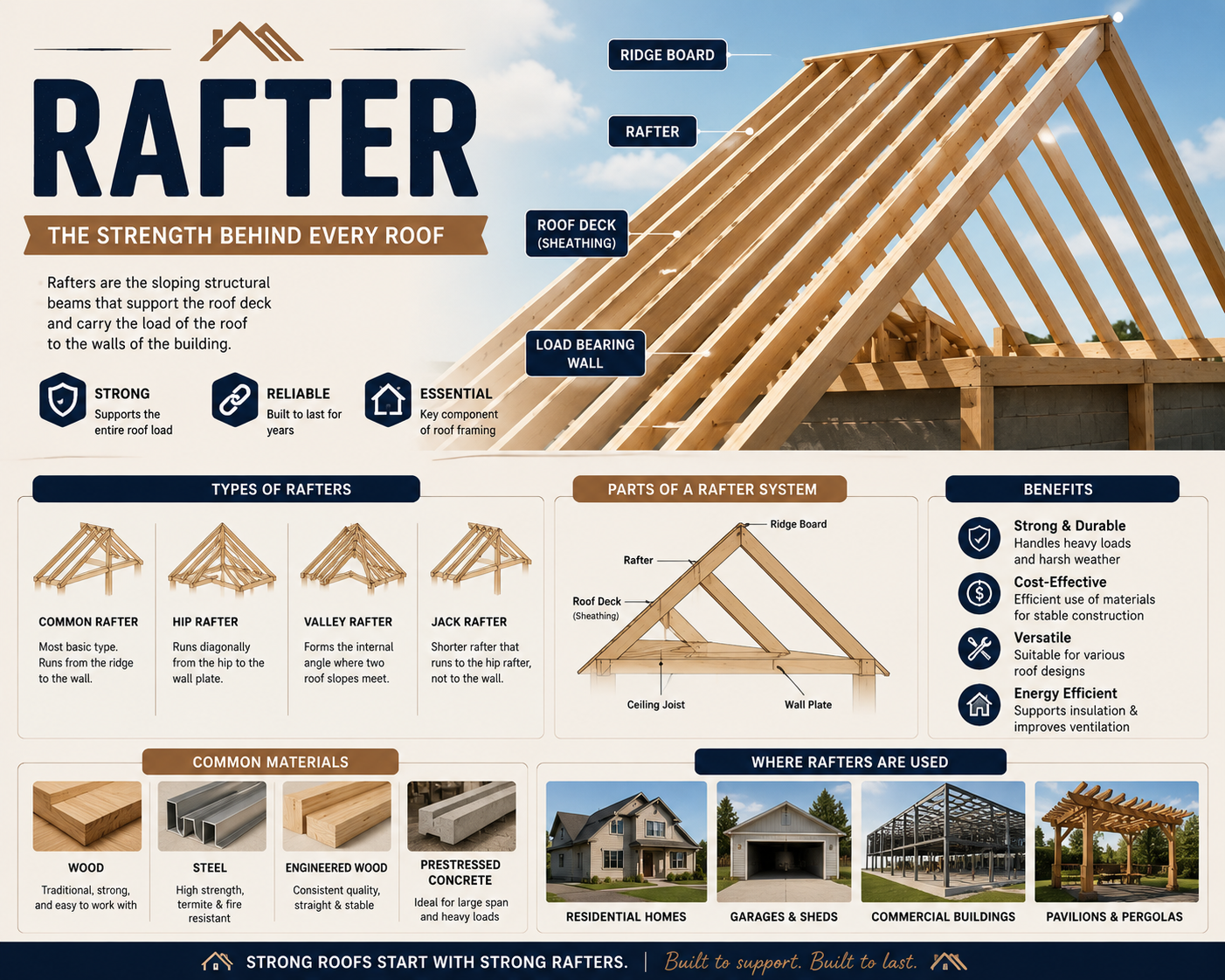
A rafter is one of the most important components used in roof construction. Rafters provide structural support to roofs and help distribute the roof’s weight evenly to the walls of a building. They are commonly used in residential homes, commercial buildings, sheds, and various architectural structures.
Whether you are learning about construction, home improvement, or roofing systems, understanding rafters is essential for building strong and durable roofs.
What Is a Rafter?
A rafter is a sloped structural beam that extends from the ridge of a roof down to the wall plate. Rafters are designed to support roofing materials such as:
- Tiles
- Metal sheets
- Shingles
- Wooden panels
They form the framework of a pitched roof and play a major role in maintaining roof stability.
Purpose of Rafters
The main purpose of a rafter is to support and strengthen the roof structure.
Key Functions:
- Carry roof loads safely
- Support roofing materials
- Improve structural stability
- Create roof shape and slope
Without properly installed rafters, roofs may become weak or unstable.
Types of Rafters
Different types of rafter systems are used depending on building design and roof style.
1. Common Rafters
These are the standard rafters used in most residential roofs.
Features:
- Simple design
- Equal spacing
- Easy installation
2. Hip Rafters
Hip rafters are used in hip roof designs where roof slopes meet at corners.
Benefits:
- Improved roof strength
- Better weather resistance
3. Valley Rafters
Valley rafters support the internal angles where two roof slopes connect.
They help:
- Direct rainwater flow
- Strengthen roof intersections
4. Jack Rafters
Jack rafters are shorter rafters connected to hip or valley rafters.
These are commonly used for:
- Complex roof designs
- Decorative roofing structures
Materials Used for Rafters
A rafter can be made from different construction materials.
Wood Rafters
Wood is the most common material because it is:
- Affordable
- Easy to work with
- Durable when treated properly
Steel Rafters
Steel rafters are popular in commercial buildings due to:
- High strength
- Long lifespan
- Resistance to pests and fire
Engineered Lumber
Modern construction often uses engineered wood products for added stability.
Difference Between Rafters and Trusses
People often confuse rafters with roof trusses, but they are different.
Rafters
- Built on-site
- Offer attic space
- Suitable for custom roof designs
Trusses
- Pre-manufactured structures
- Faster installation
- Common in modern construction projects
Both systems are widely used depending on construction needs.
Advantages of Using Rafters
Flexible Roof Design
Rafters allow customized roof shapes and architectural styles.
Extra Storage Space
Homes with rafters often have attic or loft space.
Easier Renovation
Rafter roofs are easier to modify compared to truss systems.
Strong Structural Support
Properly installed rafters create durable roofing systems.
Common Problems with Rafters
Like any structural component, a rafter can face issues over time.
Water Damage
Roof leaks can weaken wooden rafters.
Pest Infestation
Untreated wood may attract termites or insects.
Sagging Roof
Weak or damaged rafters can cause roof sagging.
Rot and Decay
Moisture exposure can lead to wood deterioration.
Regular roof inspections help prevent these problems.
Rafter Installation Process
Installing a rafter system requires careful planning and skilled labor.
Basic Steps:
- Measure roof dimensions
- Cut rafters to the correct angle
- Install ridge board
- Attach rafters securely
- Add roof sheathing and covering
Professional installation ensures safety and structural integrity.
Importance of Proper Rafter Design
Proper rafter design is essential because it affects:
- Roof strength
- Building safety
- Weather resistance
- Long-term durability
Incorrect sizing or spacing may lead to structural failures.
SEO Value of “Rafter”
The keyword rafter has good SEO potential in construction and home improvement niches because:
- Roofing topics receive consistent search traffic
- Construction professionals search for technical information
- DIY home improvement content is highly popular
Related Keywords:
- roof rafter design
- wooden rafters
- rafter vs truss
- roof framing rafters
- steel roof rafters
Final Thoughts
A rafter is a crucial part of roof construction that provides strength, stability, and support for buildings. From residential homes to commercial projects, rafters remain an essential roofing solution because of their flexibility and durability.
Understanding how rafters work can help homeowners, builders, and construction professionals create safer and more efficient roof structures.